
Family photos with a toddler do not need to depend on perfect smiles, long poses, or a child following every instruction. Some of the most meaningful Hawaii photographs happen while a child explores the beach, holds a parent’s hand, runs through the sand, or takes a quiet break in someone’s arms.
The goal is not to make your toddler behave like an adult. The goal is to plan a Big Island family photography session that gives your child enough comfort, movement, and time to be themselves.
Choose the Session Time Around Your Toddler
Beautiful light matters, but a rested child matters more. Before selecting morning or sunset, consider your toddler’s usual wake time, nap, dinner, and bedtime—plus the effect of traveling to Hawaii.
Families visiting from the mainland may find that children wake very early during the first days of the trip. In that case, a morning session can feel easier than trying to keep a toddler happy until sunset.
Sunset can still work beautifully when the child’s routine allows it. I help families compare both options instead of automatically choosing the most popular time.
Read more about morning vs. sunset photography on the Big Island.
Do Not Schedule Photos on Arrival Day
Arrival day often includes a long flight, rental-car pickup, luggage, unfamiliar meals, and a disrupted sleep schedule. Even when travel goes smoothly, young children may be tired or overwhelmed.
Whenever possible, allow your family time to settle in before the session. The second or third day of a trip often works well: everyone has recovered, but you still have flexibility later in the vacation if weather changes.
Choose a Toddler-Friendly Big Island Location
A dramatic beach is not necessarily the best beach for a toddler. Some Big Island locations have long walks, uneven lava rock, strong wind, limited shade, or difficult access.
For families with young children, I consider:
Walking distance from parking
Sand and lava-rock terrain
Open space for safe movement
Wind and ocean conditions
Crowds and distractions
Morning and evening light
Access for strollers or grandparents
Anaehoʻomalu Bay can be a helpful option for some families because it offers open space and varied scenery near Waikoloa. Learn more in my A-Bay family photography guide.
Let Your Toddler Move
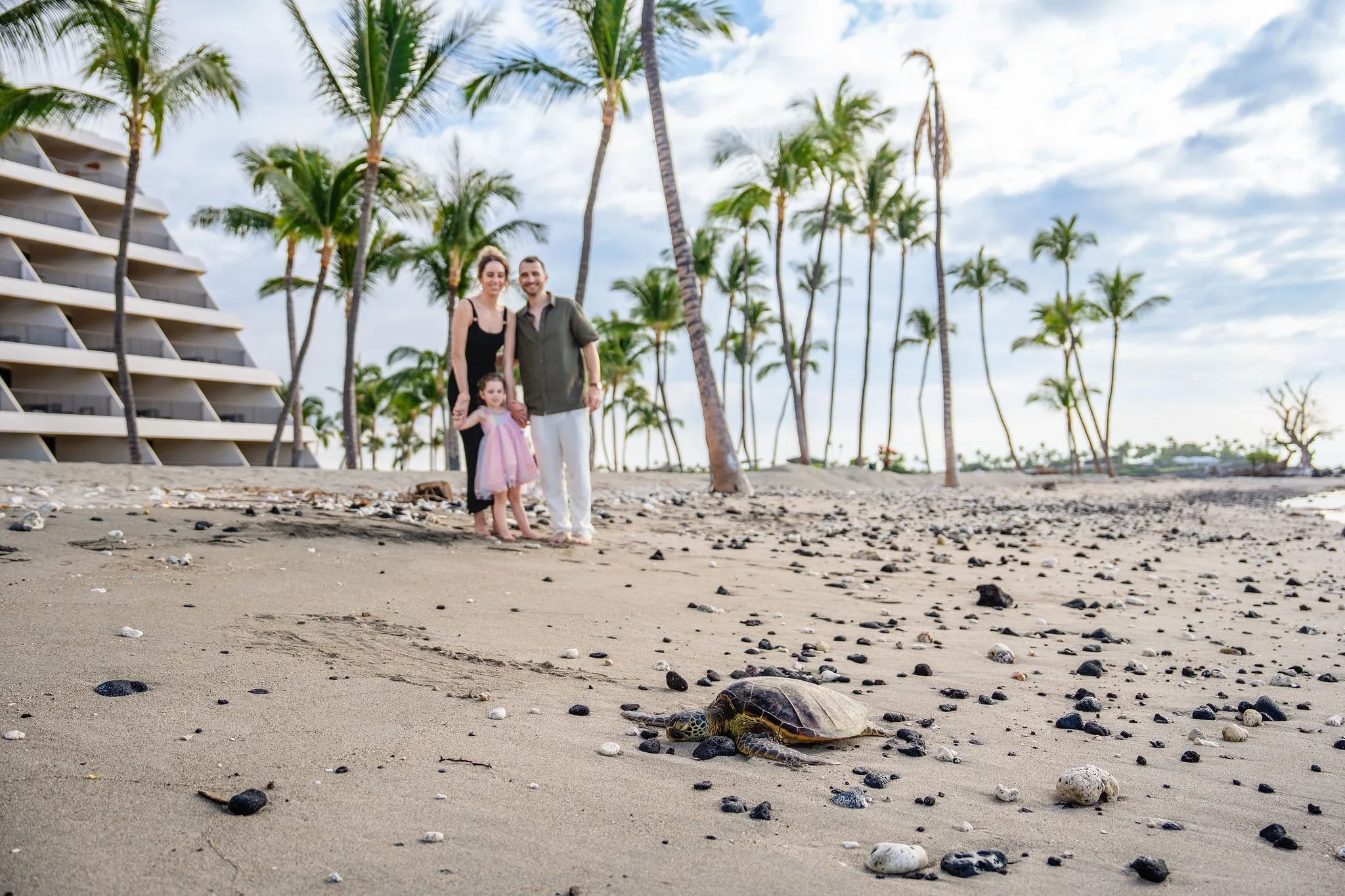
Toddlers are not designed to stand still for an hour. A relaxed session can include walking, running, being lifted, cuddling, dancing, collecting safe natural objects, or looking at the ocean with a parent.
I use simple prompts and short moments of direction rather than expecting long periods of formal posing. We can create traditional family portraits while also leaving room for candid interactions.
Bring Only a Few Useful Items
You do not need a large bag of props. A few practical items can make the session easier:
Water
A small, non-messy snack
Wipes
A backup outfit for very young children
Comfortable shoes for reaching the location
A familiar small item if it helps your child settle
Avoid introducing a favorite toy at the beginning unless it is necessary. Once a toddler has it, they may not want to put it down. Keep comfort items available for breaks.
Plan Clothing for Comfort and Movement
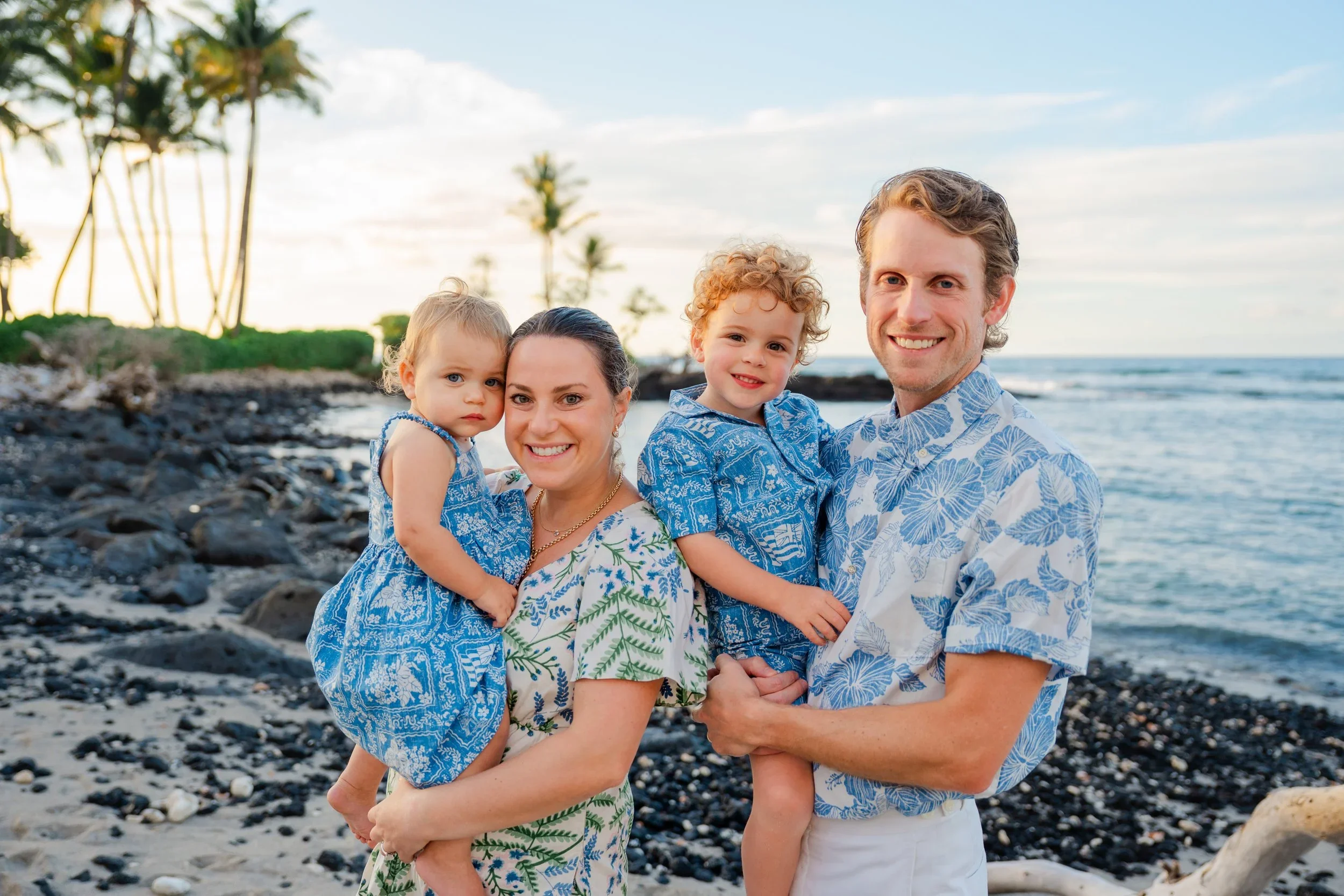
Choose breathable clothing that allows your toddler to sit, walk, and be held comfortably. Soft neutral colors and natural textures photograph well against the ocean, sand, greenery, and lava rock.
Avoid stiff clothing, uncomfortable shoes, large logos, neon colors, and accessories that require constant adjustment. If your child is sensitive to a new outfit, let them wear it before the session so it feels familiar.
Coordinate the family rather than dressing everyone identically. Cream, beige, white, dusty blue, sage, muted pink, and warm earth tones work well in Hawaii.
Keep Expectations Realistic
Your toddler may not smile on command, and that is okay. They may need time to observe the location before joining in. They may want to be held or may suddenly become interested in the sand instead of the camera.
A successful session is not measured by perfect behavior. It is measured by whether we create photographs that feel like your family. Quiet expressions, curiosity, cuddles, laughter, and movement are all part of the story.
How Parents Can Help During the Session
Stay close and engaged instead of repeatedly calling the child’s name
Follow prompts without worrying about the camera
Avoid asking for “one more smile” many times
Offer comfort when needed
Keep your own expression relaxed
Allow short breaks without treating them as failure
Children often respond to their parents’ energy. When adults stay calm and playful, toddlers have more room to relax.
What if Your Toddler Has a Meltdown?
Meltdowns can happen, especially during travel. We pause, reset, offer water or a snack, change the activity, or let the child stay close to a parent. I do not expect young children to perform continuously.
If the child needs a quiet moment, I can photograph parents together, siblings, or details while they recover. Flexible session flow helps us continue without adding pressure.
Include Connection, Not Only Camera Smiles
Looking at the camera is only one kind of family photograph. Your final gallery can also include:
Parents walking with their child
Snuggles and close-up moments
Playful movement
Children interacting with siblings
Wide photographs showing the Hawaii landscape
Natural expressions and small details
These photographs often become favorites because they show how the experience felt, not only how everyone looked.
Frequently Asked Questions
What is the best time for family photos with a toddler?
The best time depends on the child’s sleep schedule and the effects of travel. Morning is often easier for early risers, while sunset works well for children comfortable with a later evening.
How long should a toddler family session be?
Many families do well with 30 to 60 minutes. The best package depends on family size, location, desired variety, and whether extended family members are joining.
What if my child will not look at the camera?
We do not need every photograph to be camera-facing. I use play, movement, connection, and gentle prompts to create a complete gallery.
Should we bring a stroller?
That depends on the location. Some beaches and lava-rock areas are not stroller-friendly. I provide access information after the location is selected.
Can grandparents join us?
Yes. Multi-generational sessions can include the full family as well as grandparents with grandchildren and individual household groupings.
What happens if my toddler is sick?
Please contact me as early as possible. A sick child will not enjoy the session, and the appropriate next step depends on timing, availability, and the booking agreement.
Do you help us choose the location?
Yes. I recommend locations based on where you are staying, your child’s age, preferred time, accessibility, and the scenery you want.
Plan Relaxed Big Island Family Photos With Your Toddler
You do not need a child who loves posing to create meaningful Hawaii family photographs. With a thoughtful time, suitable location, and flexible approach, your session can feel like time together rather than a performance.
Explore my Big Island family photography experience, review packages and pricing, or contact me about your vacation dates.
